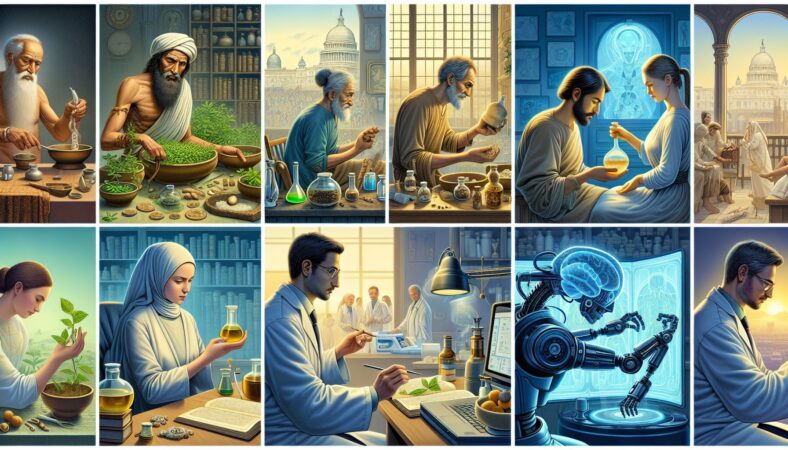
Medical science has come a long way since the dawn of human civilization. Over the centuries, humanity has witnessed extraordinary advancements in diagnosing, treating, and preventing diseases. From ancient remedies based on superstition to the sophisticated technology of today, medical science has proven its ability to transform lives. Let us delve into the remarkable journey of medical science, from its beginnings to where it stands today.
The Ancient Wisdom: Primitive Medicine
Centuries ago, medicine was firmly rooted in the wisdom and practices of ancient civilizations. The early medical traditions of civilizations such as Egypt, China, India, and Greece laid down the foundation for medical science as we know it today. Although these practices might appear primitive now, they held remarkable significance at the time.
Ancient Egyptians, for instance, relied on a combination of practical and spiritual remedies to treat various ailments. They used natural substances such as herbs, animal organs, and minerals. Similarly, Ayurveda, an ancient Indian system, emphasized the balance between mind, body, and spirit to maintain optimal health.
Revolutionary Discoveries and Scientific Revolution
The medical landscape took a significant leap forward during the Renaissance period and the scientific revolution that followed. The works of great minds such as Leonardo da Vinci, Galileo Galilei, and Andreas Vesalius paved the way for empirical observations and a deeper understanding of the human body.
In the 18th and 19th centuries, groundbreaking discoveries emerged, significantly transforming medical science. Edward Jenner’s development of the smallpox vaccine and Louis Pasteur’s germ theory revolutionized the understanding of infectious diseases and led to the development of more effective treatments.
Modern Medicine: From Antibiotics to Genomics
The 20th century saw unprecedented advancements in medical science, forever changing the way diseases are diagnosed and treated. One of the most significant breakthroughs was the discovery of antibiotics, which helped combat deadly infectious diseases and increased life expectancy worldwide.
Another groundbreaking milestone was the unraveling of the human genome. The completion of the Human Genome Project in 2003 paved the way for personalized medicine, enabling targeted treatments based on an individual’s unique genetic makeup. This extraordinary development holds tremendous potential for treating illnesses with greater precision and efficacy.
Tech Revolution: The Future of Medical Science
With the rapid advancement of technology, medical science has entered a new era. Artificial intelligence, machine learning, and robotics are poised to revolutionize healthcare. The integration of these cutting-edge technologies allows for faster, more accurate diagnoses, efficient data analysis, and the development of innovative treatments.
Telemedicine has also emerged as a crucial facet of modern healthcare, especially during the recent global pandemic. Remote consultations, wearable devices, and digital health records have made healthcare more accessible and convenient, breaking down barriers of distance and resources.
Conclusion
Medical science has traversed a remarkable path throughout history, transcending ancient remedies to embrace cutting-edge technology. From the wisdom of ancient civilizations to the recent explosion of scientific discoveries, medical science has continuously transformed and evolved. As we look to the future, we can anticipate even more exciting breakthroughs, shaping a world where diseases are conquered and healthcare becomes more personalized than ever before. Let us celebrate the remarkable achievements of medical science and remain hopeful for a healthier and brighter future for all.