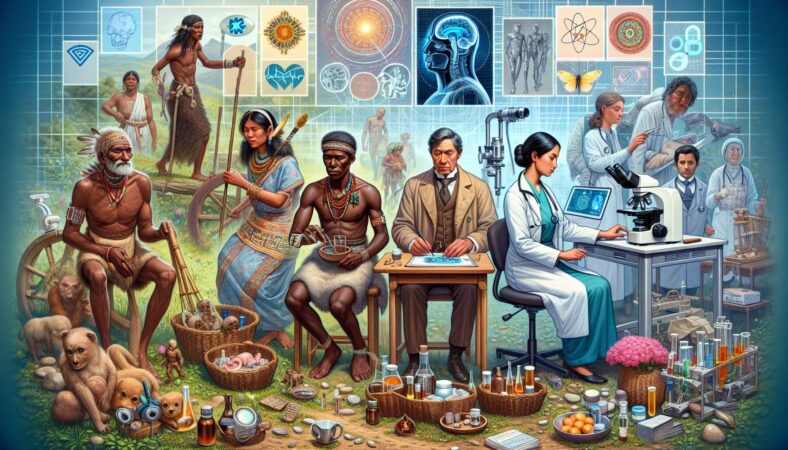
Medical science, the fascinating field that combines knowledge from various disciplines to understand the human body and develop life-saving treatments, has come a long way over the centuries. From ancient times to the modern age, medical science has transformed how we perceive, diagnose, and treat diseases. Today, we delve into the evolution of medical science and how it continues to change lives through relentless innovation.
The journey of medical science begins
The study of medicine traces back to ancient civilizations when healers relied on a combination of folklore, religious beliefs, and herbal remedies to treat illnesses. However, it wasn’t until the time of the ancient Greeks and Egyptians when the foundation of medical science started to take shape.
The milestones that shaped medical science
Throughout history, several milestones revolutionized medical science and paved the way for modern advancements. One such milestone was the discovery of antibiotics by Alexander Fleming in 1928. This breakthrough opened new possibilities in fighting bacterial infections and saving countless lives.
Another groundbreaking moment was the development of the first successful vaccine by Edward Jenner in 1796. Jenner’s discovery eradicated smallpox, a disease that had plagued humanity for centuries, and laid the foundation for future vaccine development against numerous deadly diseases.
The emergence of modern medical technology
In recent decades, medical science has experienced an exponential growth in technology, enabling accurate diagnoses and innovative treatments. The advent of imaging techniques like X-ray, MRI, and CT scans revolutionized diagnostic capabilities, allowing doctors to visualize internal structures and detect potential abnormalities.
Moreover, advancements in genetics and molecular biology led to the development of personalized medicine. Tailoring treatments to an individual’s unique genetic makeup has opened new doors for tackling diseases, resulting in improved outcomes and reduced side effects.
The future of medical science
As we stand on the precipice of a new decade, medical science is poised to witness even greater breakthroughs. With the rise of artificial intelligence, machine learning, and big data analytics, healthcare professionals can access vast amounts of information to improve diagnoses and develop customized treatment strategies.
Furthermore, regenerative medicine, a field that aims to restore damaged tissues and organs, holds immense promise. Stem cell research and tissue engineering techniques offer hope for those suffering from conditions previously deemed incurable, such as spinal cord injuries and degenerative diseases.
Conclusion
Medical science has continuously evolved, transforming from an ancient practice of superstition and herbology to a cutting-edge field driven by empirical evidence and technological advancements. With each new discovery, medical science has enabled us to overcome diseases that once haunted humanity. As we look towards the future, the possibilities seem infinite, and we eagerly await the next breakthrough that will change countless lives.
So, next time you marvel at the wonders of modern medicine, take a moment to appreciate the centuries of knowledge, innovation, and scientific rigor that have made it all possible. Medical science truly is the epitome of the human pursuit for a healthier and better world.