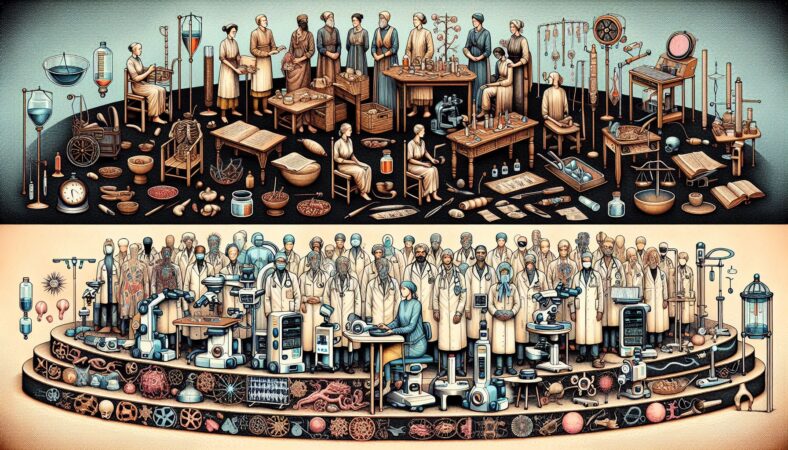
Medical science has come a long way over the years, providing us with diverse advancements that have revolutionized the field of healthcare. From improved diagnostic tools to groundbreaking treatments, medical science continues to push boundaries and offer hope to millions around the world. In this article, we will explore some of the remarkable innovations in the realm of medical science and how they are transforming the way we view and treat diseases.
A New Era of Precision Medicine
With advancements in technology and the availability of big data, the era of precision medicine has dawned upon us. Gone are the days of generalized treatment plans; now, healthcare is becoming increasingly tailored to individual patients. Thanks to genetic sequencing and molecular profiling, doctors can analyze a patient’s unique genetic makeup and identify targeted treatments for a particular disease. This approach not only enhances the efficacy of treatment but also reduces the likelihood of adverse side effects.
The Rise of Immunotherapy
Immunotherapy has emerged as a groundbreaking treatment option for various forms of cancer. Through manipulating and enhancing the body’s immune system, this approach harnesses the power to attack cancer cells specifically. Previously, traditional treatments like chemotherapy and radiation therapy often caused collateral damage to healthy cells. However, immunotherapy provides a more precise and effective way of battling cancer, leading to improved patient outcomes and survival rates.
Artificial Intelligence in Healthcare
Artificial intelligence (AI) is revolutionizing healthcare practices, offering unmatched efficiency and accuracy. AI-powered algorithms equipped with deep learning capabilities can quickly process vast amounts of medical data, enabling doctors to make more accurate diagnoses and treatment decisions. Moreover, AI is making its way into surgical procedures, with robotic-assisted surgeries becoming increasingly common. These advancements not only improve surgical precision but also make minimally invasive procedures more accessible to patients, leading to faster recovery times and shorter hospital stays.
Enhancing Rehabilitation with Virtual Reality
Virtual reality (VR) is proving to be an effective tool in the field of medical rehabilitation. By immersing patients in simulated environments, VR therapy can help individuals regain motor skills, improve memory, and manage pain. This technology has shown promising results in various conditions, such as stroke rehabilitation, PTSD treatment, and chronic pain management. By providing an immersive and engaging experience, VR therapy accelerates the recovery process and enhances the overall well-being of patients.
Conclusion
Medical science is forging ahead, rapidly transforming the way we approach the treatment and care of patients. Precision medicine, immunotherapy, artificial intelligence, and virtual reality are just a few examples of the incredible advancements reshaping the healthcare landscape. With each new discovery, medical scientists and healthcare professionals move closer to finding cures for some of the most challenging diseases that afflict humanity. By embracing these innovations, we can look forward to a future where healthcare is more personalized, precise, and accessible, improving both the quality and longevity of our lives.