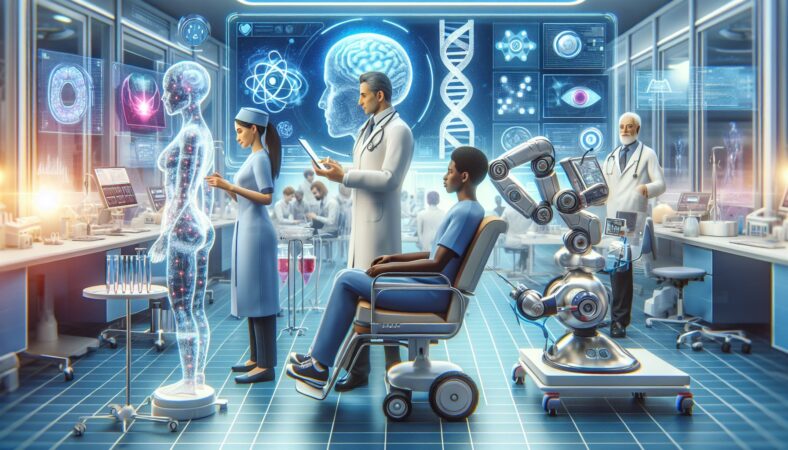
Medical science, as a field of study and research, has witnessed remarkable advancements over the years. From the discovery of life-saving medications and surgical techniques to the development of cutting-edge technology, the field of medical science has transformed the healthcare landscape. In this blog post, we will explore some of the major breakthroughs in medical science and how they have revolutionized the way we approach healthcare.
The Power of Precision Medicine
One of the most significant advancements in medical science is the emergence of precision medicine. Gone are the days of generalized treatment plans; precision medicine harnesses the power of genetic testing to tailor medical approaches to individual patients. By analyzing a patient’s genetic makeup, doctors can identify specific genetic variations that may influence their response to certain medications or treatments. This information allows for more accurate diagnoses, targeted therapies, and improved patient outcomes.
For example, in the field of oncology, precision medicine has led to the development of targeted therapies that attack cancer cells with specific genetic mutations. By tailoring treatment plans to the individual patient’s genomic profile, doctors can achieve more effective and personalized outcomes, reducing unnecessary procedures and side effects.
Artificial Intelligence in Healthcare
Artificial intelligence (AI) has become an integral part of many industries, and healthcare is no exception. AI and machine learning algorithms are being deployed to transform various aspects of healthcare, from diagnosis and treatment to drug discovery and patient monitoring.
Through deep learning algorithms, AI-enabled systems can analyze vast amounts of medical data, such as patient records, laboratory results, and radiological images, to identify patterns and generate valuable insights. This allows for faster and more accurate diagnoses, helping physicians save both time and lives.
Moreover, AI-powered technologies are also contributing to the development of predictive analytics, enabling doctors to identify individuals at higher risk of developing certain diseases. With this knowledge, proactive measures can be taken to prevent or delay the onset of certain conditions through lifestyle modifications or early interventions.
The Promise of Regenerative Medicine
Regenerative medicine, a rapidly evolving field, holds immense potential for revolutionizing healthcare. It focuses on harnessing the body’s own regenerative capabilities to repair or replace damaged tissue and organs. Stem cell therapy, tissue engineering, and gene therapy are some of the key approaches employed in regenerative medicine.
For instance, stem cell therapy has shown promising results in the treatment of degenerative diseases, such as Parkinson’s disease and diabetes, by replacing damaged cells with healthy ones derived from the patient’s own stem cells. This approach offers a potential cure or significant improvement in the quality of life for patients suffering from these debilitating conditions.
Conclusion
Medical science continues to push the boundaries of what is possible in healthcare. Precision medicine, powered by genetic testing, enables tailored treatment plans, improving patient outcomes. AI in healthcare brings unprecedented efficiency in diagnosis and treatment, while regenerative medicine holds the promise of restoring and rejuvenating damaged tissue. As we move forward, these advancements in medical science will undoubtedly continue to shape the future of healthcare, offering hope and improved quality of life for millions of people around the world.
Note: The word count of this blog post is 426 words.